Xinhua
18 Mar 2026, 02:15 GMT+10
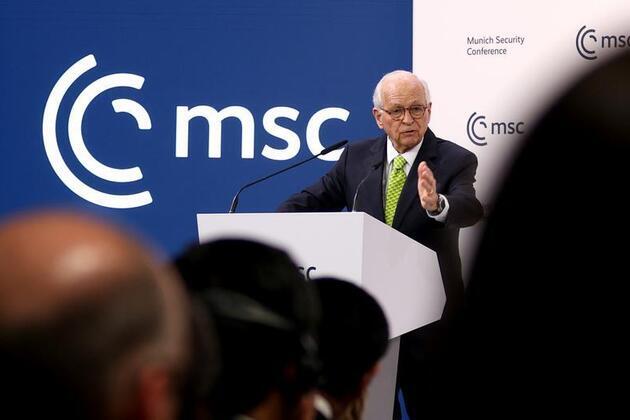
Bozo Kovacevic, a Croatian foreign policy analyst and former ambassador to Moscow, said the refusal of many U.S. allies to join the coalition reveals deep cracks within NATO.
BERLIN, March 17 (Xinhua) -- U.S. President Donald Trump's latest push to build a coalition to escort commercial vessels through the Strait of Hormuz is hitting a wall of European resistance, exposing growing rifts in the transatlantic security relationship, analysts say.
While Washington has intensified pressure on NATO members and European partners to join the mission, several European countries have rejected the proposal or expressed caution, citing concerns over potential military escalation, a lack of prior consultation, and differing strategic priorities.
COLD RECEPTION
Trump warned on Sunday that NATO could face a "very bad" future if its allies fail to support U.S. efforts to keep the Strait of Hormuz open. However, rather than rallying support, the request has been met with a notably cold response across Europe.
According to Politico, citing European Union (EU) diplomats, foreign ministers meeting in Brussels this week were nearly unanimous in opposing the U.S. proposal, expressing reluctance to send ships and troops into a conflict they did not initiate.
German Chancellor Friedrich Merz on Monday ruled out military involvement in protecting oil tankers in the Strait of Hormuz, stressing that NATO is a "defense alliance" rather than an "intervention alliance."
Italian newspaper La Repubblica described the U.S. initiative as a "Mission Impossible," highlighting the high risks and costs of securing the narrow maritime chokepoint.
France has also distanced itself from a U.S.-led offensive approach. President Emmanuel Macron said the deployment of the French Navy in the region is for a "purely defensive and escort mission," aimed at helping reopen the strait only after the most intense phase of the conflict has passed.
The reluctance extends across the bloc. EU foreign policy chief Kaja Kallas said on Monday that the EU has no intention of expanding its existing naval mission "Aspides" into the high-risk strait.
Pedro Candeias, deputy director of the Portuguese newspaper Publico, argued in a commentary that the "America First" policy - often characterized by unilateral action - may now be backfiring.
Radio France described the U.S. request as a sign of a faltering strategy, noting that Washington is now seeking support from allies it had previously sidelined. It warned that aligning with the U.S. at this stage could be a serious mistake for Europe.
DIVERGING STRATEGIC PRIORITIES
For many European policymakers, the tensions in the Middle East are viewed as a bilateral issue rather than a collective NATO responsibility.
Ben Bekkering, a senior research associate on security and defense at the Netherlands Institute of International Relations Clingendael, told local media on Monday that NATO is not obligated to intervene.
"The NATO treaty states that countries should not bring bilateral conflicts into NATO, and that is exactly what this is, especially given how the U.S. initially acted. In addition, it falls outside the treaty area," he said.
Bozo Kovacevic, a Croatian foreign policy analyst and former ambassador to Moscow, said Washington's approach - issuing demands while expecting automatic alignment - undermines the consultation and joint decision-making that traditionally define alliances.
Speaking on Croatian Radio on Tuesday, Kovacevic said the refusal of many U.S. allies to join the coalition reveals deep cracks within NATO.
Europeans do not want to become involved in "someone else's war," said Dana Lusa, a professor at the Faculty of Political Science of Zagreb University.
"It is very difficult to expect European countries to risk their forces in a situation where they could be directly affected by Iranian attacks," she added.
Greek columnist Athanasios Adamopoulos echoed this view, writing in Naftemporiki that European partners are being asked to participate in a war "about which they were not informed" and "do not know the objectives."
Portuguese commentator Miguel Baumgartner said many in Europe see the U.S. initiative as an attempt to share or dilute the political costs of the war.
Economic factors also play a role, according to Zhang Xiangrong, an associate professor at the Institute of Middle Eastern Studies of Northwest University in China. He noted that Europe, unlike the United States, is highly dependent on global energy markets. Consequently, Europe has become the main "external cost bearer" of the conflict and is far more vulnerable to regional instability, Zhang said.
EUROPEAN STRATEGIC AUTONOMY
Amid mounting U.S. pressure, European leaders are increasingly advocating diplomatic solutions over military escalation.
Josef Gregory Mahoney, a professor of politics and international relations and director of the Center for Ecological Civilization at East China Normal University, said the only way to secure the Strait of Hormuz is to end the conflict and return to diplomacy.
He added that Washington's attempts to pressure allies are likely to reinforce their resolve to resist.
Spanish economist Pedro Barragan said the situation reflects a broader trend: increasingly diverse European positions on U.S. military actions and a growing push for strategic autonomy.
Oscar Martinez Tapia, a political scientist at IE University, said since the Greenland-related tensions, the United States has relied on "highly performative and symbolic actions" to project the idea that "the United States is back on the global stage," while signaling to domestic audiences a renewed engagement in "hard power" competition. Such actions, he noted, carry "a significant degree of theatricality."
Rather than reinforcing U.S. leadership, Trump's Hormuz strategy "may ironically strengthen European unity and accelerate Europe's pursuit of military autonomy beyond the U.S. security umbrella," Martinez Tapia said.
Get a daily dose of Peking Press news through our daily email, its complimentary and keeps you fully up to date with world and business news as well.
Publish news of your business, community or sports group, personnel appointments, major event and more by submitting a news release to Peking Press.
More InformationNEW YORK, New York - Despite another two high profile assassinations by Israel in Iran, spiking oil prices, and a central bank hiking...
NEW DELHI, India: Indian fintech firm PhonePe has temporarily halted plans for an initial public offering, citing geopolitical tensions...
SAN FRANCISCO, California: Apple's newly announced MacBook Neo, a low-cost laptop aimed at students, is the most repairable notebook...
CHICAGO, Illinois: U.S. airlines are increasingly relying on revenue from co-branded credit cards, reshaping how loyalty programs reward...
NEW YORK/SAN FRANCISCO: Meta is considering sweeping layoffs that could affect 20 percent or more of its workforce as the company seeks...
NEW YORK, New York - U.S. stock markets closed firmly in positive territory on Monday, building momentum throughout the session to...
LONDON, U.K.: The war in the Middle East is forcing pharmaceutical companies to reroute shipments of critical medicines to the region,...
MELBOURNE, Australia: A jury in a Sydney court found a businessman from the city guilty of providing reports to two people he should...
BEIJING, China: Apple said it will reduce the commission fees it charges on its App Store in mainland China, a move expected to save...
LONDON, U.K.: Chinese electric vehicle maker BYD said on March 13 that it will launch a new premium EV in Europe next month capable...
Bozo Kovacevic, a Croatian foreign policy analyst and former ambassador to Moscow, said the refusal of many U.S. allies to join the...
Kabul [Afghanistan], March 18 (ANI): The Islamic Emirate of Afghanistan has lost trust in Pakistan's commitment to diplomacy after...